Language:


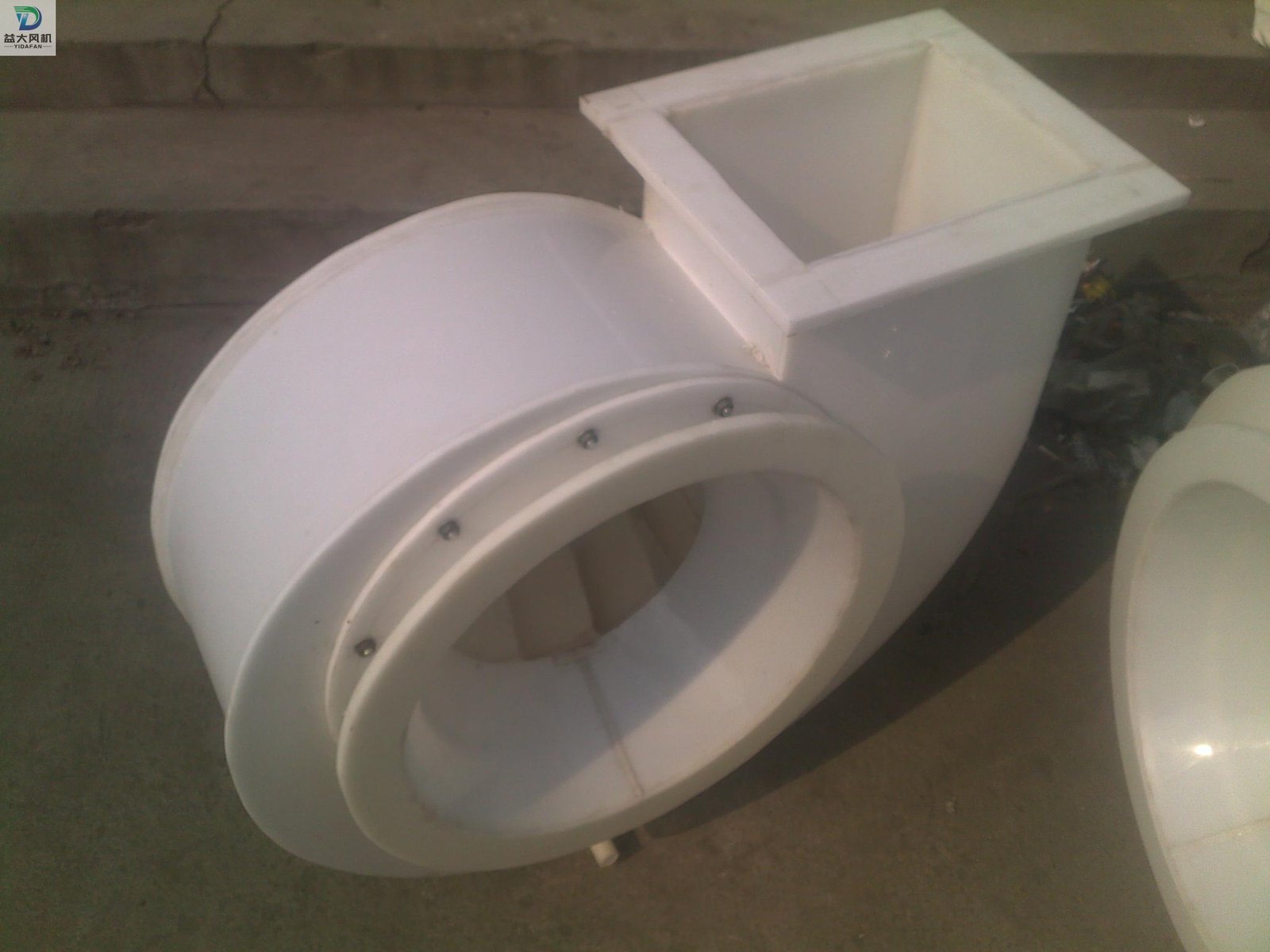
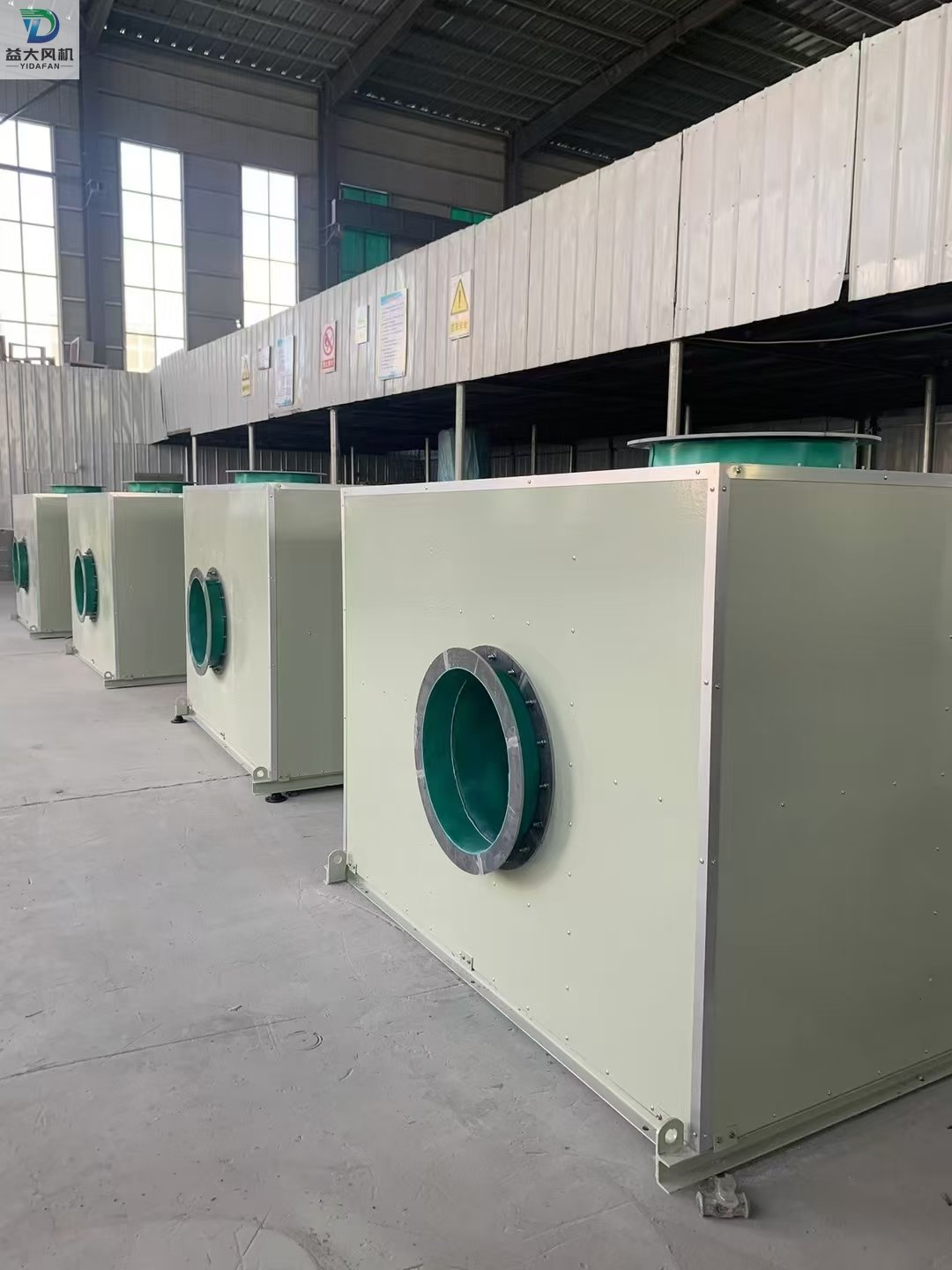
Chlorine fan material selection starts with one question: dry chlorine or wet chlorine. Dry chlorine with very low moisture is relatively mild to carbon steel. Once moisture is present, chlorine forms hydrochloric and hypochlorous acid and attack rises sharply, so titanium, PVC/CPVC, FRP or PTFE lining must be used. Copper and aluminium are not suitable in chlorine service.
Moisture content is the decisive boundary. Where condensation or moisture ingress during start-up and shutdown is possible, the duty should be treated as wet chlorine.
| Location | Material / process | Basis |
| Impeller and casing, dry chlorine | Carbon steel with strict moisture control | Mild attack at very low moisture; avoid condensation |
| Impeller and casing, wet chlorine | Titanium (GB/T 3620.1) | Good resistance in wet chlorine |
| Casing and duct, wet chlorine | PVC/CPVC, FRP or PTFE lining | Non-metallic option avoids chloride attack |
| Fasteners and shaft | Titanium or sheathed parts; no copper or aluminium | Chlorine reacts with copper and aluminium |
| Sealing | PTFE | Chlorine resistant and reliable |
Grade 316L is not suitable for wet chlorine: chlorides break down the passive film and cause pitting and crevice corrosion. Moisture content, temperature and condensation risk should be written into the technical agreement.
| Measure | Practice | Purpose |
| Condensation control | Casing insulation; inlet above dew point | Prevents dry chlorine becoming wet |
| Drainage | Low point drain in the casing | Removes condensate |
| Weld treatment | Inert gas shielding for titanium; passivation for stainless | Maintains weld corrosion resistance |
| Leak control | PTFE seal with leak drainage | Chlorine is toxic and must not escape |
| Earthing | Equipotential bonding per GB 12158 | Static control |
| Enclosure rating | IP grade per GB/T 4208 | Outdoor and washdown protection |
Typical duties include chlorine handling in chlor-alkali plants, chlorine liquefaction tail gas, sodium hypochlorite and bleaching stages, water treatment chlorination rooms, PVC and chlorination reaction off gas, and chloride process titanium dioxide tail gas.
Corrosion risk in these duties comes from moisture and temperature rather than dust load. Even at low temperature, moisture ingress during start-up and shutdown must be prevented; once condensation occurs, a dry chlorine duty quickly becomes a wet chlorine duty.
Chlorine is toxic and strongly oxidising. Ventilation and emergency provisions must be confirmed against the site hazardous area and occupational hygiene requirements; this page covers material selection only.
| Standard | Title | Purpose |
| HG/T 20679 | Design code for external anti-corrosion of chemical equipment and piping | Anti-corrosion design basis |
| GB/T 3620.1 | Titanium and titanium alloy designations and chemical composition | Titanium grade confirmation |
| GB/T 4237 | Hot rolled stainless steel plate, sheet and strip | Stainless base material acceptance |
| GB/T 1236 | Industrial fans - Performance testing using standardized airways | Air flow and pressure test |
| GB/T 9239.1 / ISO 21940-11 | Mechanical vibration - Balance quality requirements for rigid rotors | Balancing, typically G6.3 |
Fan size, air flow, pressure and motor power are calculated for the actual duty. Please provide chlorine moisture content, medium temperature, condensation risk and available space.
A steel lining is not a single coating. The process chain runs from grit blasting to Sa2.5, adhesive application, sheet or hot pressing, vulcanisation (autoclave or ambient), spark testing, thickness measurement, to flange turn-up and weld treatment. A failure at any step shows up later as blistering, debonding or a local perforation.
Chlorine duty splits into dry and wet service: wet chlorine mainly uses PTFE-lined and PE-lined construction and normally avoids rubber lining, while dry chlorine with moisture control may allow carbon steel.
| Lining type | Base and lining | Typical temperature | Media and process notes |
| Rubber lining | Steel + natural or butyl rubber | Usually up to 80 C | Dilute acids and abrasion; sheet applied after blasting, autoclave cured |
| Plastic lining | Steel + PP, PE or PVDF | Commonly 60 to 120 C | Acids, alkalis and salts; hot pressed or loose lined, flanged seal |
| PP-lined | Carbon steel + polypropylene | Commonly up to 100 C | Acids, alkalis and salts; sheet or roll lining, double welded seams |
| PE-lined | Carbon steel + polyethylene | Commonly 60 to 70 C | Abrasion and low temperature; ambient solids bearing media |
| PTFE-lined | Carbon steel + PTFE | Commonly -180 to 260 C | Strong acids, alkalis and oxidisers; isostatic or loose lining, flanged seal |
| Natural rubber lining | Carbon steel + natural rubber | Commonly up to 70 C | Dilute acids and solids; bond strength checked after cure |
| Butyl rubber lining | Carbon steel + butyl rubber | Commonly up to 90 C | Good gas tightness and weathering; suitable for gas bearing media |
Concentration, temperature, solids content and oxidising components should be written into the technical agreement. After lining, the fan is performance tested to GB/T 1236, balanced to GB/T 9239.1, and the lining is spark tested and thickness checked.
Dry chlorine lacks the moisture needed for sustained attack, so carbon steel can be used. Moist chlorine forms hydrochloric and hypochlorous acid and becomes far more aggressive, requiring titanium or a PVC, FRP or PTFE lined solution. Moisture content and condensation risk decide the case.
Chlorides in wet chlorine break down the passive film of 316L and cause pitting and crevice corrosion, so service life is unpredictable. Titanium is preferred for wet chlorine; where metal is not desired, PVC/CPVC, FRP or PTFE lining can be used.
Chlorine is toxic and strongly oxidising: shaft sealing must control leakage, the casing needs a low point drain and insulation against condensation, and earthing follows GB 12158. Ventilation and emergency provisions follow the site hazardous area classification.
Related pages: Anti-corrosion fan range Hydrochloric acid resistant fan Product range
Contact: Lee
Phone: 13793313126
Tel: 0533-6820280
Email: chuanyi99@126.com
Add: Wujia Industrial Park, Nanjiao Town, Zhoucun District, Zibo City, Shandong Province, China


